
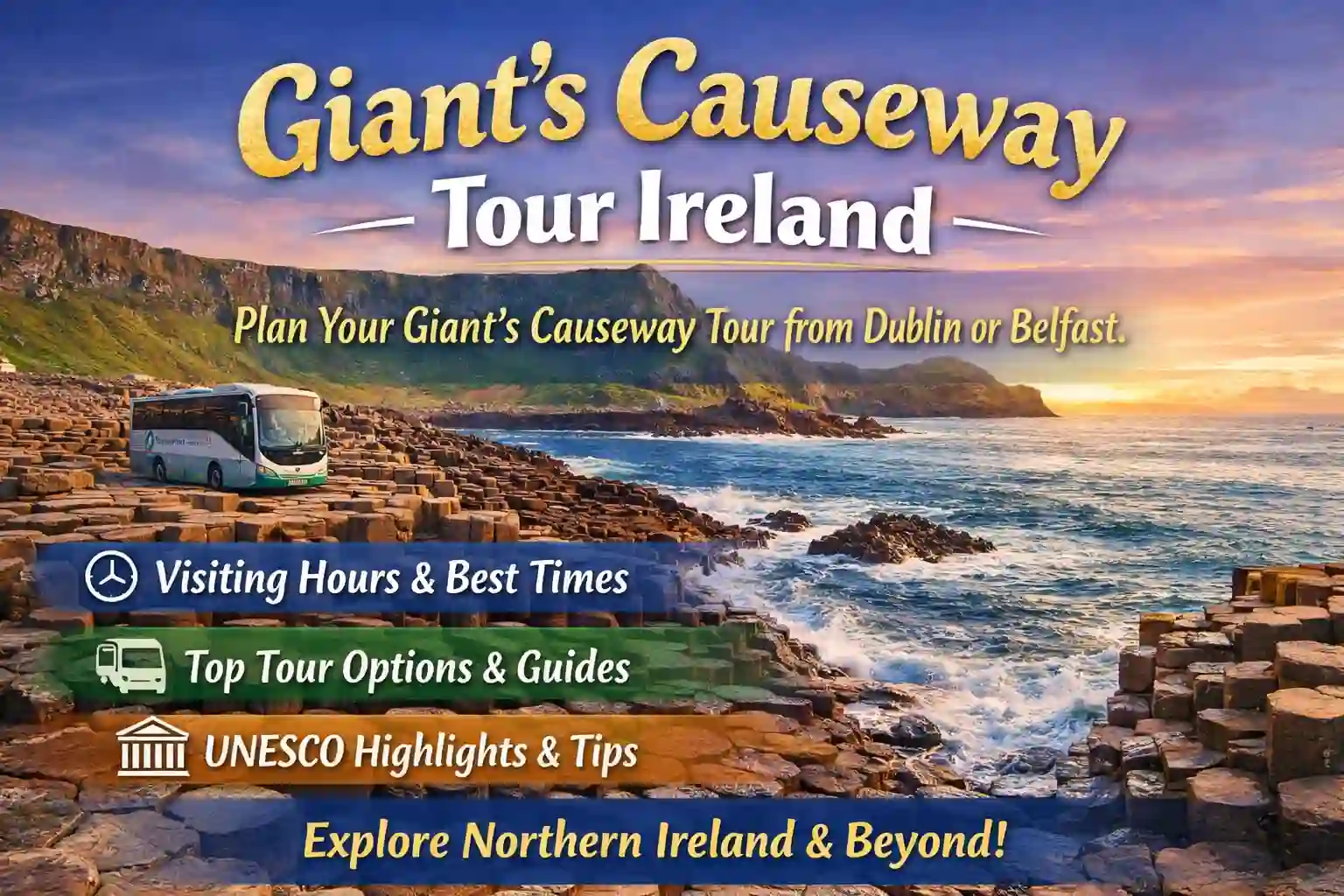
Giant's Causeway Tour Ireland: Complete Travel Guide 2026
15 March 2026
Book a Private Tour of Ireland
Visiting the Giant’s Causeway ranks among Ireland’s most unforgettable experiences. This UNESCO World Heritage Site in Northern Ireland features 40,000 interlocking basalt columns formed by volcanic eruptions 60 million years ago, creating a natural wonder that looks almost too perfect to be real.
Book Giant Causeway Private Tours
Whether you’re traveling from Dublin, Belfast, or exploring the Causeway Coastal Route, this guide covers everything you need to plan your visit, choose the right tour, and maximize your time at this geological masterpiece.
What Makes Giant’s Causeway Extraordinary?
The Giant’s Causeway sits on the rugged County Antrim coastline, where hexagonal stone columns rise from the sea like nature’s own stepping stones. Legend claims Irish giant Fionn mac Cumhaill built the causeway to reach Scotland and fight his rival Benandonner, but science tells a different story.
Geological Formation:
Around 60 million years ago, intense volcanic activity caused molten basalt to cool rapidly, creating the distinctive geometric patterns. The columns are mostly hexagonal, though some have four, five, seven, or eight sides, a phenomenon that fascinates geologists worldwide.
Key Features:
-
40,000+ basalt columns ranging from a few inches to 40 feet tall
-
Three distinct formations: The Little Causeway, Middle Causeway, and Grand Causeway
-
Named structures like the Giant’s Boot, Wishing Chair, Camel’s Hump, the Giant’s Harp (columns curved like a vast musical instrument), and the Organ (columns resembling church organ pipes)
-
Coastal cliff paths offering panoramic Atlantic Ocean views
-
Rich biodiversity, including seabirds, rare plants, and marine life
The site attracts over 1 million visitors annually, making it Northern Ireland’s most popular tourist attraction and a bucket-list destination for travelers from the USA.
Tour Options: How to Visit Giant’s Causeway
1. Day Tours from Dublin
Duration: 12–14 hours (including travel) Distance: 168 miles (270 km) one way
Multi-day experiences like this Giant’s Causeway and Belfast tour from Dublin allow you to explore at a comfortable pace, combining the causeway with Belfast attractions, Carrick-a-Rede Rope Bridge, and Dark Hedges.
Best for: Visitors based in Dublin wanting comprehensive Northern Ireland experiences without rushing.
2. Tours from Belfast
Duration: 6–8 hours Distance: 60 miles (97 km) from Belfast
Shorter travel times mean more exploration. Tours typically include the Causeway Coastal Route, Dunluce Castle ruins, and Bushmills Distillery (Ireland’s oldest whiskey distillery, established 1608).
Best for: Travelers staying in Belfast or flying into Belfast International Airport.
3. Self-Drive Visits
Rental cars provide maximum flexibility. The A2 Coastal Route from Belfast ranks among the world’s most scenic drives, comparable to California’s Pacific Coast Highway.
Parking: £6–£12.50 depending on season and time Address for GPS: 44 Causeway Road, Bushmills, BT57 8SU
Best for: Independent travelers comfortable driving on the left side of the road.
4. Guided Walking Tours
Once at the site, free guided walks depart hourly from the Visitor Centre. Guides explain geological history, mythology, and point out formations easily missed by solo visitors.
What to See Beyond the Causeway
| Attraction | Distance from Causeway | Highlights | | Carrick-a-Rede Rope Bridge | 7 miles | Swaying bridge 100 feet above sea | | Dunluce Castle | 5 miles | Medieval cliff-top ruins | | Dark Hedges | 15 miles | Game of Thrones filming location | | Bushmills Distillery | 2 miles | Whiskey tastings and heritage tours | | Ballintoy Harbour | 6 miles | Picturesque fishing village |
The Causeway Coastal Route connects these sites along 120 miles of dramatic coastline, offering pull-offs for photography and hidden beaches accessible only at low tide.
Practical Visitor Information
Opening Hours: Visitor Centre: 9:00 AM – 6:00 PM (extended summer hours) The stones themselves: Accessible 24/7 (free after-hours access via clifftop path)
Admission Prices (2026):
-
Adults: £13.50
-
Children (5–17): £7.00
-
Family ticket: £35.00
-
Parking: Included with admission during business hours
Best Time to Visit:
-
Early morning (before 10 AM) or late afternoon (after 4 PM) to avoid cruise ship crowds
-
September–November for autumn colors and fewer tourists
-
Weekdays are significantly less crowded than weekends
What to Bring:
-
Waterproof jacket (weather changes rapidly)
-
Sturdy walking shoes (stones can be slippery)
-
Sunscreen (coastal UV exposure is intense)
-
Camera with extra battery (you’ll take hundreds of photos)
The walk from the Visitor Centre to the causeway stones takes 10–15 minutes downhill. A shuttle bus (£2 return) operates for those with mobility challenges.
Essential Planning Tips
Currency Note: Northern Ireland uses British Pounds Sterling (£), not Euros. Bring cash for small purchases, though most vendors accept cards.
Mobile Coverage: Good 4G/5G reception throughout the site. Free Wi-Fi available in the Visitor Centre.
Accessibility: Paved paths reach the Middle Causeway. The Grand Causeway requires navigating uneven stones. Wheelchair-accessible viewpoints available.
Photography Tips:
-
Golden hour (sunrise/sunset) produces the best lighting
-
Low tide exposes more columns and rock pools
-
Wide-angle lenses capture the scale; telephoto lenses isolate patterns
Food Options:
The Visitor Centre houses a café with local specialties. For authentic experiences, drive to nearby Bushmills village for traditional pubs serving Irish stew and seafood chowder.
Cultural and Historical Context
The Giant’s Causeway gained international fame through 18th-century paintings and Victorian-era tourism. Artists like Susanna Drury won awards for depicting the site, sparking scientific debate about its origins — some initially believed it was man-made.
The Causeway entered recorded history in 1693 when Sir Richard Bulkeley, a fellow of Trinity College Dublin, presented a paper about it to the Royal Society. His account sparked curiosity among Europe’s intellectuals, drawing artists, scientists, and travelers to this remote corner of Ireland.
The Giant’s Causeway Tramway, opened in 1883, was one of the world’s first hydro-electric railways — it ferried Victorian tourists directly from Portrush to the stones, making the site a mainstream destination for the first time. Though the tramway is long gone, its legacy lives on in the Causeway’s enduring appeal.
The area’s maritime history is equally dramatic. In 1588, the Spanish Armada ship Girona sank off the coast near the Causeway, carrying gold and jewels. The treasures were recovered centuries later and are now displayed at the Ulster Museum in Belfast — a tangible reminder of the treacherous North Atlantic waters that have shaped this coastline for centuries.
The Irish poet Seamus Heaney, Nobel laureate, drew on the Causeway’s mystique in his work, describing it as a place where “the world’s edge and the edge of the mind” meet.
UNESCO designated it a World Heritage Site in 1986, recognizing both its geological significance and cultural impact. The National Trust manages conservation efforts, protecting the delicate ecosystem while accommodating visitors.
Game of Thrones fans recognize the nearby Dark Hedges and Ballintoy Harbour as filming locations, adding pop culture appeal to the region’s natural beauty. The Causeway itself is sometimes cited as an inspiration for Jonathan Swift’s hexagonal world-building in Gulliver’s Travels — though the connection remains a spirited local debate.
Frequently Asked Questions
How long should I spend at Giant’s Causeway?
Plan 2–3 hours minimum to walk the main trails, explore the formations, and visit the Visitor Centre. Photography enthusiasts often spend 4–5 hours capturing different lighting and tide conditions.
Can you visit Giant’s Causeway without paying?
Yes. The stones are accessible 24/7 via the clifftop path from Dunseverick. However, you’ll miss the Visitor Centre exhibits, guided tours, and convenient facilities. Parking outside business hours requires finding roadside spots.
Is Giant’s Causeway worth visiting from Dublin?
Absolutely, though the 3.5-hour drive each way makes overnight stays ideal. Combining it with Belfast sightseeing and coastal attractions creates a memorable Northern Ireland experience that justifies the journey.
What’s the difference between Giant’s Causeway and Cliffs of Moher?
Giant’s Causeway features unique hexagonal rock formations you can walk on, located in Northern Ireland. Cliffs of Moher are dramatic vertical cliffs in County Clare, Republic of Ireland. Both are must-see sites offering completely different experiences.
Are there guided tours that include multiple attractions in one day?
Yes. Most organized tours combine Giant’s Causeway with Carrick-a-Rede Rope Bridge, Dark Hedges, Dunluce Castle, and Belfast city highlights. Private chauffeur tours offer customizable itineraries based on your interests.
Conclusion
The Giant’s Causeway delivers one of Ireland’s most awe-inspiring natural experiences. Whether you believe the geological explanation or prefer the giant legend, walking among 40,000 perfectly formed basalt columns creates a sense of wonder that photographs can’t fully capture.
For visitors from the United States, especially those traveling from Florida, New York, and other big USA states, this Northern Ireland treasure represents a highlight of any Irish itinerary. The combination of dramatic coastal scenery, rich mythology, and geological significance makes it far more than just a photo opportunity.
Plan, arrive early or late to avoid crowds, and allow time to explore beyond the main causeway. The surrounding Causeway Coastal Route offers dozens of hidden gems that reward curious travelers. Your Giant’s Causeway adventure will become one of those travel stories you share for years.
Founder & Lead Driver-Guide, Ireland VIP Tours
John is the founder of Ireland VIP Tours and an experienced professional chauffeur-guide based in Dublin. With over 15 years in the luxury tour industry, he has personally guided thousands of visitors across Ireland, sharing local stories, hidden gems, and insider knowledge that only a native guide can offer.